
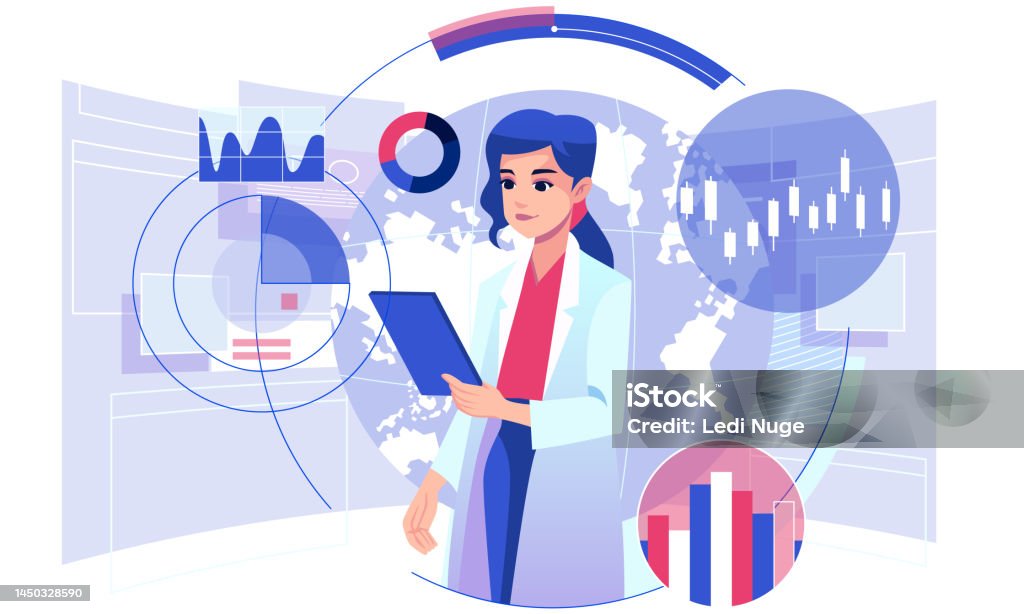

Healthcare organizations generate large amounts of information through patient services, hospital operations, medical billing, resource utilization, and clinical activities. Analyzing this information helps healthcare institutions understand performance, identify inefficiencies, and make informed operational decisions.
A Healthcare Data Analyst supports these objectives by organizing healthcare information, examining performance indicators, preparing reports, and communicating findings to relevant departments.
The position combines analytical thinking, data management, healthcare knowledge, and technical proficiency.
Understanding the Role and Responsibilities of a Healthcare Data Analyst
1. What Does a Healthcare Data Analyst Do?
A Healthcare Data Analyst collects, organizes, and interprets healthcare-related information to support administrative, financial, and clinical decision-making.
Typical responsibilities include reviewing hospital performance data, preparing reports, analyzing patient service trends, maintaining datasets, and identifying operational patterns.
Analysts may work with hospital administrators, finance departments, quality improvement teams, and healthcare professionals.
Their findings help organizations understand how resources are utilized and identify opportunities to improve healthcare services.
2. Analyzing Healthcare Performance Indicators
Performance measurement is an important part of healthcare data analysis.
A Healthcare Data Analyst may examine indicators such as patient waiting times, hospital bed occupancy, admission patterns, appointment utilization, service costs, and readmission rates.
These measurements provide insight into operational efficiency and healthcare service delivery.
For example, analyzing appointment data may reveal periods of unusually high demand or recurring scheduling delays.
However, data must be interpreted carefully because differences in patient populations, clinical complexity, and organizational processes can influence results.
3. Using Data Analysis Tools and Maintaining Accuracy
Healthcare Data Analysts use digital tools to organize information, conduct calculations, and present findings.
Microsoft Excel, SQL, Power BI, Tableau, and statistical software may be used depending on organizational requirements.
Analysts must also review datasets for missing information, duplicate records, inconsistencies, and potential reporting errors.
Because healthcare information may contain sensitive patient details, maintaining confidentiality and following applicable data protection requirements are essential.
Strong technical skills help professionals produce reliable reports and communicate useful insights to management.
4. Essential Skills and Professional Development
Important skills include data analysis, Microsoft Excel, SQL, data visualization, analytical thinking, reporting, problem-solving, and healthcare data literacy.
Educational backgrounds in statistics, health informatics, public health, computer science, healthcare administration, or related disciplines may provide useful preparation.
Entry-level opportunities may include Healthcare Reporting Assistant, Junior Healthcare Data Analyst, or Health Information Analyst.
With experience, professionals may progress into Senior Healthcare Data Analyst, Healthcare Business Intelligence Analyst, Health Informatics Specialist, or Healthcare Analytics Manager.
FINAL THOUGHTS
A Healthcare Data Analyst plays an important role in transforming complex healthcare information into meaningful operational insights.
The position requires analytical abilities, technical proficiency, accuracy, and an understanding of healthcare systems.
For individuals interested in healthcare, technology, and evidence-based decision-making, healthcare data analysis offers opportunities for professional specialization and advancement.
Effective healthcare analytics supports resource planning, operational improvements, performance monitoring, and better-informed healthcare management decisions.